
How Often Should a Homeowners Association Clean Common Areas

Updated: Aug 18
A shared entrance can start to look tired in just one rainy week. Mud collects by the door, fingerprints smudge the glass, and the trash area becomes a common problem. For a homeowners association, or VvE, the question isn't whether common areas need cleaning. The real question is how often the work should happen so the building stays clean, safe, and pleasant without wasting money.
For most apartment buildings, the best baseline is weekly cleaning for the main shared areas, with extra attention for high-traffic spots and seasonal issues. Larger buildings, those with elevators, and properties with heavy foot traffic often need cleaning two or more times per week. Smaller buildings with only a few residents may do fine with weekly or biweekly service.
The right schedule comes from the building itself: how many people use the spaces, how quickly dirt appears, what residents expect, and which areas create hygiene or safety concerns.

The Short Answer for Most VvE Buildings
A typical VvE should clean its common areas at least once a week. This usually covers:
Entrance hall
Stairwells
Elevator cabin
Corridors
Mailbox area
Handrails
Shared doors and handles
Light switches
Waste storage area
Bike storage, if used often
This weekly rhythm keeps visible dirt under control and helps prevent small annoyances from becoming recurring complaints.
A more active building may need cleaning two or three times per week. This is common when the property has many apartments, children, pets, frequent visitors, short-stay rentals, or a busy waste area. By contrast, a small building with four to six apartments and careful residents may only need a lighter weekly routine, with deeper cleaning once a month.
A good cleaning schedule is not based on habit alone. It should match how the building is actually used.
The goal is simple: residents should not have to wonder when the stairs were last cleaned.
A Practical Cleaning Frequency by Area
Not every shared space needs the same schedule. The entrance and elevator collect dirt faster than a storage room. Windows and floors need different timing. A smart VvE schedule separates daily or weekly tasks from monthly and seasonal work.
Common area or task | Suggested frequency | Why it matters |
Entrance hall | 1 to 3 times per week | This area gets the most dirt, moisture, and foot traffic. |
Stairwells | Weekly | Dust, sand, and spills can make stairs look poor and feel unsafe. |
Elevator cabin | 1 to 3 times per week | Fingerprints, floor dirt, and odors appear quickly in small enclosed spaces. |
Handrails and door handles | Weekly or more | These surfaces are touched often and should stay visibly clean. |
Corridors and galleries | Weekly or biweekly | Frequency depends on weather exposure and traffic. |
Waste storage area | Weekly or more | Odors, leaks, and loose waste can cause bigger hygiene problems. |
Bike storage | Monthly | Dirt builds up more slowly, but sand, leaves, and cobwebs collect over time. |
Interior windows and glass | Monthly or quarterly | Fingerprints and smudges affect the look of the entrance. |
Deep floor cleaning | Quarterly or twice a year | Mopping alone may not remove older dirt from tiles or stone. |
Outdoor paths near the entrance | Seasonal or as needed | Leaves, algae, and winter grit can create slip risks. |
This table is a starting point, not a fixed rule. The best VvE cleaning plan should be reviewed after a few weeks. If residents keep reporting the same issue, the schedule probably needs adjusting.
What Changes the Cleaning Schedule
A VvE with twenty apartments usually needs a different plan than a building with six. Still, size is only one factor. Some small buildings get dirty quickly because of layout, pets, or poor waste handling. Some larger buildings stay clean because circulation is well designed and residents follow clear rules.
Number of Residents and Visitors
More people mean more foot traffic. Shoes bring in sand, rainwater, leaves, and fine dust. If the building has delivery drivers, care workers, cleaners, guests, and contractors visiting often, the entrance and stairs will need more attention.
A building with short-term rentals may also need a higher frequency. Guests do not always know the house rules, and suitcases can drag dirt through the hallways.
Weather and Seasons
Rainy weeks change everything. So do autumn leaves, winter grit, and muddy shoes. In wet periods, the entrance floor may need more frequent mopping, better mats, or both.
During spring and summer, pollen, insects, and dust may be more visible around windows, doors, and outdoor galleries. A schedule that works in July may not be enough in November.
Flooring and Building Materials
Some surfaces show dirt faster than others. Light-colored tiles make dust and shoe marks visible. Natural stone may need specific cleaning products. Carpeted common areas can trap dirt and odors if not vacuumed often.
Cleaning frequency should protect the materials, not only improve the look. Harsh products or too much water can damage floors over time.
Building Layout
A compact building with one entrance is easier to keep clean. A building with multiple entrances, long corridors, galleries, basement storage, and a parking garage needs a more detailed plan.
Elevators also change the schedule. Small cabins show fingerprints and floor dirt quickly. Because residents stand close to the walls and controls, elevator cleaning should be more frequent than cleaning a quiet storage area.

A Sample Weekly Cleaning Plan for a VvE
A clear plan helps residents understand what the cleaner does and helps the VvE board check whether the work is complete. The plan does not need to be complicated. It just needs to be specific.
For a medium-sized apartment building, a weekly routine might include:
Sweep and mop the entrance hall
Clean glass doors and remove fingerprints
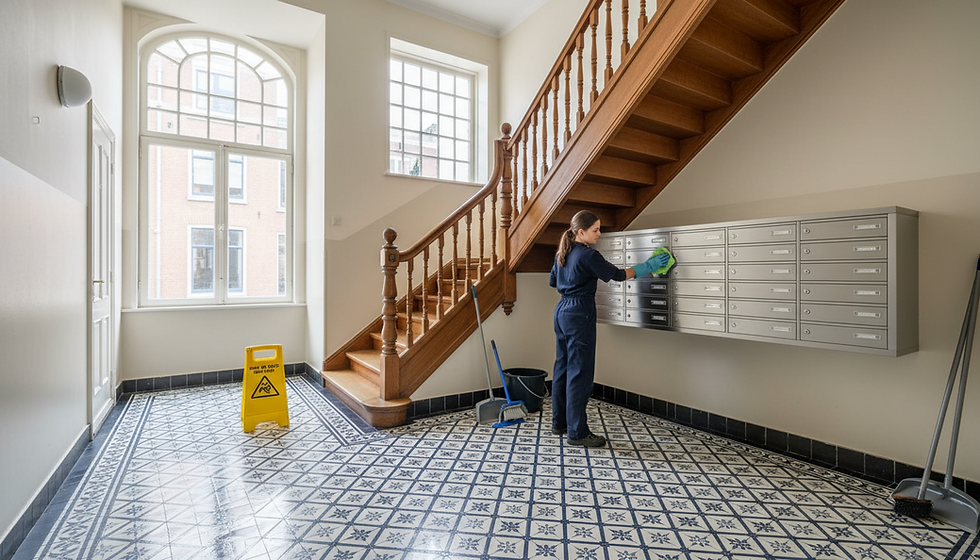
Wipe mailboxes where needed
Vacuum or sweep corridors
Clean stair treads and landings
Wipe handrails
Clean elevator floor, mirror, buttons, and walls
Remove cobwebs from corners
Check and clean the waste storage area
Report damage, leaks, odors, or unusual mess
A monthly routine may add:
Clean skirting boards and lower wall sections
Remove heavier dust from lamps and ledges
Clean interior glass more thoroughly
Wash washable walls where needed
Scrub corners and edges of floors
Check basement or storage areas
A seasonal routine may include:
Remove leaves near entrances
Treat slippery outdoor spots
Clean outdoor galleries
Wash exterior-accessible glass if included
Do a deeper floor clean after winter
This split keeps weekly cleaning focused and affordable while ensuring the building still gets deeper care.
When Weekly Cleaning Is Not Enough
Weekly cleaning works for many buildings, but it can fail when the shared areas get dirty faster than the schedule can handle. Residents often notice this before the board does.
Signs that the VvE should increase the frequency include:
The entrance looks dirty two or three days after cleaning
Residents complain about the same area repeatedly
The waste room smells between cleaning visits
Elevator buttons, mirrors, or floors are often visibly dirty
Stairwells collect sand, leaves, or pet hair quickly
Wet floors near the entrance are common
New residents or guests mention the building feels poorly maintained
A higher frequency does not always mean cleaning the whole building more often. The VvE can add a short extra visit for the entrance, elevator, and waste area while keeping stairwells on a weekly schedule. This targeted approach often gives the best result for the budget.
It can also help to improve prevention. Better entrance mats, clear waste instructions, and quick reporting of spills can reduce cleaning pressure.
When Less Frequent Cleaning Can Work
Some VvE buildings do not need multiple visits per week. A smaller building may stay clean with a weekly or biweekly schedule if residents are careful and common areas are limited.
Less frequent cleaning can work when:
There are few apartments
There is no elevator
Residents rarely use indoor corridors
The entrance has good mats
The waste area is separate and well maintained
The building has low visitor traffic
Residents quickly clean up accidental spills
Still, the VvE should be careful with cutting cleaning too far. A building may save a small amount each month but lose comfort, appearance, and resident satisfaction. Poor cleaning can also make minor maintenance issues harder to spot.
A cleaner often notices problems early, such as leaks, broken lights, damaged door closers, pests, or waste problems. That extra set of eyes has value.
How the VvE Should Decide on the Right Schedule
The best cleaning schedule is a decision based on observation, not guesswork. A VvE board can use a simple process.
Walk Through the Building at Different Times
Do not judge the building only right after the cleaning visit. Check the entrance and stairs halfway through the week, after rain, and after waste collection. That gives a more honest picture.
Photos can help track recurring problems. Keep them practical and respectful. The goal is to document dirt patterns, not to blame residents.
Ask for Specific Resident Feedback
General complaints like “the building is dirty” are hard to act on. Ask residents where and when they see problems.
Useful questions include:
Which area gets dirty fastest?
Is the issue daily, weekly, or seasonal?
Are there odors in the waste room?
Are the stairs or entrance ever slippery?
Does the elevator need more frequent attention?
This helps the VvE choose targeted changes.
Define the Cleaning Tasks Clearly
A vague agreement leads to different expectations. “Clean the entrance” can mean a quick mop to one person and detailed glass, corners, and mailboxes to another.
The cleaning agreement should list the tasks, areas, and frequency. It should also say how issues are reported. For example, if the cleaner sees dumped furniture in the waste room, who gets notified?
For boards searching for VvE Schoonmaak Amsterdam, clear task lists make quotes easier to compare. A reliable VvE schoonmaker should be able to explain what is included per visit and what counts as extra work.

What Should Be in a VvE Cleaning Agreement
A good cleaning agreement protects both the VvE and the cleaning company. It reduces confusion and makes quality easier to check.
The agreement should include:
The exact areas included
The frequency per area
The standard tasks per visit
Products and equipment used
Any tasks that need special products
Window cleaning arrangements
Waste room expectations
Reporting process for damage or hazards
Holiday arrangements
Quality checks and contact person
The VvE should also decide whether cleaning supplies are stored in the building or brought by the cleaner. If supplies are stored on-site, they should be kept safely and not block escape routes.
Avoid choosing only on the lowest monthly price. A cheaper plan may leave out key tasks or allow too little time per visit. The better question is whether the cleaner has enough time to do the work properly.
Cleanliness is Also a Safety Issue
Common area cleaning is not only about appearance. Dirt, water, leaves, and loose waste can create safety problems.
Wet entrance floors can become slippery. Dusty stairwells can make handrails unpleasant to use. Waste leaks can attract pests or create odors. Poorly maintained bike storage can block walkways.
A regular cleaner helps keep these problems visible and manageable. The VvE still needs maintenance checks, but cleaning visits often reveal early warning signs.
This matters most in areas used by everyone:
Entrances
Stairs
Elevators
Escape routes
Waste rooms
Parking and storage access
Outdoor paths to the building
Cleaning should never block access or create hazards. Wet floors should be handled carefully, and cleaning equipment should not be left in shared walkways.
How to Balance Cost and Quality
Cleaning is a recurring cost, so VvE boards naturally watch the budget. The best way to control cost is not to reduce cleaning blindly. It is to match frequency to need.
A good balance may look like this:
The VvE can also run a trial. Increase cleaning for two months during a problem period, then review complaints, visible dirt, and costs. If the result is clear, adjust the annual plan.

The Best Answer is a Schedule People Can Trust
So, how often should a homeowners association clean common areas? For most VvE buildings, once per week is the minimum practical standard. Busy entrances, elevators, and waste areas may need attention two or three times per week. Lower-traffic spaces can often be cleaned monthly or seasonally.
The best cleaning plan is clear, realistic, and easy to check. It specifies which areas are cleaned, how often they are cleaned, and what each visit includes. It also leaves room for weather, resident feedback, and changes in building use.
A clean building does more than look better. It feels better to come home to, reduces complaints, and helps protect shared property. Start with a weekly baseline, watch how the building responds, then adjust the schedule until the common areas stay consistently clean between visits.


Comments