
How Sustainable Cleaning Helps Your VvE Achieve ESG Goals

A VvE’s sustainability plan often starts with insulation, solar panels, or heating systems. Yet one of the most visible daily choices sits much closer to home: how the building is cleaned.
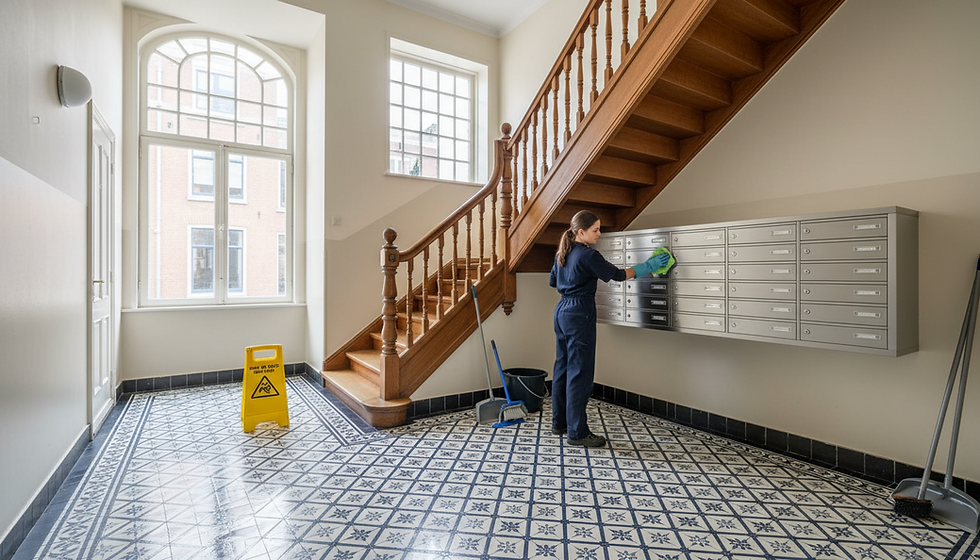
Shared entrances, stairwells, elevators, storage areas, laundry rooms, and parking garages shape how residents experience a property. They also use water, energy, cleaning products, plastic packaging, transport, and labor. That makes cleaning a practical part of ESG, especially for a Vereniging van Eigenaars that wants to show care for the building, residents, service providers, and long-term property value.
Not every VvE has a formal ESG reporting duty. Still, ESG gives the board a useful framework for better decisions. Sustainable cleaning turns that framework into visible action.

Why cleaning belongs in your VvE’s ESG plan
ESG stands for environmental, social, and governance. It can sound like a boardroom term, but in a VvE it becomes very practical.
A VvE manages shared property. That means it already makes decisions that affect energy use, waste, maintenance, safety, comfort, and costs. Cleaning touches all of these areas.
A standard cleaning contract may focus only on frequency and price. A sustainable cleaning approach looks at a broader set of questions:
Which products enter the building?
How much water does cleaning require?
Can packaging waste be reduced?
Are cleaning staff treated fairly and given safe working conditions?
Does the VvE receive clear records of what has been done?
Can cleaning prevent wear, damage, complaints, and early replacement?
This is where How Sustainable Cleaning Helps Your VvE Achieve ESG Goals becomes more than a slogan. The right cleaning plan supports environmental targets, resident wellbeing, and stronger building management at the same time.
ESG area | What sustainable cleaning can improve |
Environmental | Lower chemical load, less water waste, reduced plastic packaging, smarter transport, better waste separation |
Social | Healthier shared spaces, safer floors and stairs, fairer working conditions, fewer resident complaints |
Governance | Clear service agreements, transparent product choices, measurable routines, better documentation |
Environmental goals start with the products and methods used
The environmental side of cleaning is the easiest to see and measure. A VvE can reduce unnecessary impact without accepting lower hygiene standards.
Choose lower-impact cleaning products
Conventional cleaning products can include harsh chemicals, strong fragrances, dyes, and ingredients that are not ideal for indoor air or wastewater. Sustainable cleaning favors products with recognized eco-labels, concentrated formulas, and clear safety information.
For a VvE, this matters in places where residents pass through every day. Think of:
Entrance halls
Elevators
Stair railings
Bike storage rooms
Mail areas
Shared laundry rooms
Waste rooms
Fragrance-free or low-fragrance products can also reduce irritation for residents who are sensitive to strong smells. Clean should not mean heavily perfumed.
Reduce single-use plastic and packaging
Cleaning products often arrive in disposable bottles, wipes, bags, and small containers. A sustainable cleaning provider can cut this waste by using refill systems, concentrated products, reusable spray bottles, and microfiber cloths.
This may sound small, but shared buildings need cleaning week after week. Small packaging choices repeat hundreds of times over a year.
A VvE can ask cleaning providers to explain:
Whether products come in concentrate form
How empty containers are handled
Whether reusable cloths replace disposable wipes
How mop heads and cloths are washed
Whether suppliers use refillable systems
Use water carefully
More water does not always mean better cleaning. Modern methods can clean well with less water, especially when staff use the right tools for the surface.
Microfiber systems, pre-dosed products, and correct mopping techniques help reduce waste. They also lower the risk of over-wet floors, which can damage some surfaces and create slip hazards.
Clean in a way that extends material life
A sustainable cleaning plan protects the building itself. The wrong chemical can dull flooring, damage natural stone, corrode metal fixtures, or weaken seals. The right method helps shared assets last longer.
That supports ESG because replacement has an environmental cost. New flooring, new handrails, new tiles, and repair work all require materials, transport, labor, and disposal of old components.
A VvE should match cleaning methods to the building’s actual surfaces. Natural stone, rubber flooring, wood, ceramic tile, stainless steel, and painted walls all need different care.

Sustainable cleaning supports healthier shared spaces
The social part of ESG often receives less attention than the environmental part. For a VvE, it may be the most direct benefit.
Residents experience social value through comfort, safety, respect, and trust. Good cleaning contributes to all four.
Better indoor conditions for residents
Shared areas are not private living rooms, but they still affect daily wellbeing. Residents touch elevator buttons, railings, door handles, mailboxes, and waste room doors. Children sit on steps. Older residents rely on safe, clean handrails. Visitors form an impression before they reach an apartment door.
Sustainable cleaning focuses on hygiene without unnecessary chemical exposure. That means using the right product for the right task, not using the strongest product everywhere.
For example, a daily entrance cleaning may need dust removal, floor care, and touchpoint cleaning. It may not need aggressive disinfectants unless there is a clear reason. Using milder products where appropriate can keep spaces pleasant while still clean.
Safer floors, stairs, and entrances
A clean building should also be a safe building. Slippery floors, wet stairwells, blocked waste areas, and poorly stored cleaning supplies can create risks.
Sustainable cleaning includes disciplined routines:
Clear wet-floor procedures
Correct drying methods
Safe product storage
Good ventilation during cleaning
Fast response to spills or tracked-in dirt
Seasonal attention to rain, leaves, grit, and winter conditions
These details matter for buildings with older residents, families with children, and people with limited mobility.
Respect for cleaning staff
ESG also includes how people are treated. A VvE may not directly employ cleaners, but it can still set expectations through its contract.
A responsible cleaning agreement should allow enough time to do the work properly. If the budget is so low that staff must rush, quality drops and working conditions suffer. Sustainable cleaning means fair planning, safe products, suitable equipment, and realistic task lists.
A VvE can ask a provider about:
Staff training
Safe handling of products
Protective equipment when needed
Work schedules
Supervision and quality checks
Clear reporting after each visit
Residents often notice the result when cleaners have the time and tools to do careful work.
Governance improves when cleaning becomes measurable
Governance is about responsible decision-making. For a VvE, this means the board can explain what it buys, why it buys it, and how performance is checked.
Cleaning contracts can become vague over time. Residents may complain that “the hall is dirty,” while the cleaning company says tasks were completed. Without clear standards, the board must judge by impression.
A more sustainable contract creates better structure.
Turn cleaning into a clear service plan
A good plan explains which tasks happen daily, weekly, monthly, quarterly, and seasonally. It also identifies special areas that need extra care.
For example:
High-touch points
Glass entrance doors
Elevator tracks
Stair corners
Waste room floors
Bike storage dust and cobwebs
Parking garage oil spots
Outdoor entrance mats
Mailbox areas
This helps the VvE compare providers fairly. It also reduces misunderstandings with residents.
Ask for product transparency
A VvE does not need to become a chemistry expert. It can still ask simple, useful questions.
Which products will be used in shared areas? Are they labeled or certified by a recognized environmental standard? Are safety data sheets available? Are fragrances limited? Are concentrated products used?
That level of transparency supports governance because the board can document its choice. It also helps answer resident questions calmly and clearly.
Track cleaning quality over time
Governance improves when the VvE keeps basic records. This does not need to be complex.
Useful records include:
Cleaning schedule
Task checklist
Complaint log
Inspection notes
Product list
Incident reports
Periodic review with the cleaning provider
Over time, these records reveal patterns. If the waste room needs more attention on weekends, the schedule can change. If entrance floors wear quickly, the VvE can adjust matting and cleaning methods. If residents keep reporting poor elevator cleaning, the provider can correct the routine.

Cleaning can support waste and circularity goals
Many VvEs already deal with waste separation, container areas, bulky waste, and resident behavior. Cleaning and waste management often overlap.
A neglected waste room can quickly become a source of odor, pests, stains, and complaints. A clean, well-organized waste area makes it easier for residents to use bins correctly.
Sustainable cleaning supports circularity in three ways.
It keeps recycling areas usable
If recycling bins are surrounded by spills and loose waste, residents may stop sorting properly. Clear floors, clean handles, visible signs, and regular odor control all help.
The VvE can combine cleaning with simple design choices:
Use clear bin labels
Keep walkways open
Place bins where residents can reach them easily
Add absorbent mats where leaks are common
Schedule extra checks after collection days
It reduces waste from the cleaning process
A cleaning provider should manage its own waste carefully. That includes product packaging, disposable materials, broken tools, and wastewater handling.
Reusable cloth systems and concentrated products can reduce the amount of waste created just to keep the building clean.
It helps prevent premature replacement
Circular thinking also means taking care of what already exists. When cleaners use the correct methods, floors, fixtures, doors, mats, and wall finishes often stay in better condition. That can delay replacement and reduce waste from renovation.
What to include in a sustainable cleaning contract
A VvE does not need a complicated ESG policy to improve its cleaning contract. Start with clear requirements and build from there.
A strong contract should cover both performance and responsibility.
Contract item | What to ask for |
Product standards | Lower-impact products where suitable, clear product list, safety information available |
Cleaning methods | Surface-specific cleaning, microfiber use, careful water use, correct dosing |
Waste reduction | Refillable containers, reduced disposables, reusable cloths where practical |
Staff practices | Training, safe product handling, realistic work hours, suitable equipment |
Quality checks | Inspection routine, reporting method, contact point for issues |
ESG reporting | Simple summary of products, improvements, complaints, and corrective actions |
Flexibility | Seasonal changes, extra cleaning after maintenance work, special attention areas |
The board can also ask providers to propose improvements. A good cleaner sees the building regularly and may spot issues before the VvE does.
For example, they may notice that an entrance mat is too small, causing more dirt to spread through the hall. They may see that a waste room needs a washable wall finish near the bins. They may suggest a less aggressive product for a floor that is losing its shine.
That practical feedback helps the VvE manage the building better.
How to introduce sustainable cleaning without raising conflict
Cleaning is personal. Residents notice smells, stains, dust, noise, and timing. Any change can lead to questions, especially if the building stops smelling like strong detergent.
Clear communication helps.
Before changing providers or products, the VvE board can explain the reason in plain language:
The building will use lower-impact products where possible.
Cleaning quality will remain the priority.
Strong fragrances may be reduced.
Waste rooms, entrances, and touchpoints will receive clear attention.
Residents can report issues through the normal channel.
It also helps to run a short trial. Choose one entrance, stairwell, or building section. Review the result after several weeks. Ask the cleaning provider what worked and what needs adjustment.
Good ESG work does not need drama. It needs clear choices, follow-up, and steady improvement.

The business case for a VvE
Sustainable cleaning is not only about doing the right thing. It can also support the VvE’s long-term financial planning.
Poor cleaning can create hidden costs. Dirt wears down floors. Wrong products damage surfaces. Damp mopping can affect materials. Messy waste rooms invite extra callouts. Resident complaints take time from the board or property manager.
Better cleaning can reduce these problems. It may also make the building more attractive to current and future owners. A well-kept entrance, clean stairwell, and fresh waste area send a clear signal: this building is managed with care.
The VvE should still look closely at price. The lowest quote may not include enough time, training, or proper materials. A slightly higher monthly cost can make sense if it protects shared assets, reduces complaints, and supports ESG goals.
The best value often comes from a contract that is specific, measurable, and realistic.
A practical starting checklist for your next board review
Use the next cleaning review to ask better questions. The board does not need to solve everything at once.
Start with this checklist:
Review the current cleaning schedule and compare it with actual building use.
Ask for a list of cleaning products used in shared areas.
Identify where disposable materials can be reduced.
Check whether the cleaning method matches each surface.
Inspect waste rooms, entrances, elevators, and stairwells separately.
Ask how cleaning staff are trained and supervised.
Create a simple complaint and inspection log.
Set one or two ESG goals for the next contract period.
Review results at least once or twice a year.
Small steps count when they become routine. A VvE that improves product choices, reduces waste, protects surfaces, and documents performance already has a stronger ESG story.
The takeaway
Sustainable cleaning gives a VvE a practical way to turn ESG goals into everyday action. It lowers avoidable environmental impact, supports healthier shared spaces, improves working conditions, and gives the board clearer control over service quality.
The most effective approach is simple: choose safer products where possible, reduce waste, protect building materials, set clear expectations, and track the results. When cleaning supports the building instead of merely reacting to mess, the whole VvE benefits.


Comments