
What Affects the Cost of VvE Cleaning in Amsterdam

A clean shared entrance can make an apartment building feel cared for within seconds. A dusty stairwell, overflowing bins, or stained lift floor does the opposite just as quickly. For a VvE in Amsterdam, cleaning is more than a routine expense. It affects resident comfort, building value, safety, and the way owners feel about paying monthly contributions.
The cost of VvE cleaning is shaped by several moving parts. Some are obvious, such as the size of the building. Others are easy to miss, such as access, waste handling, water points, or how often residents use shared spaces.
Amsterdam adds its own local details. Narrow staircases, older buildings, canal-side entrances, limited parking, and mixed-use properties can all influence the quote. Understanding these factors helps a VvE compare offers fairly and choose a cleaning plan that fits the building rather than paying for a generic service.
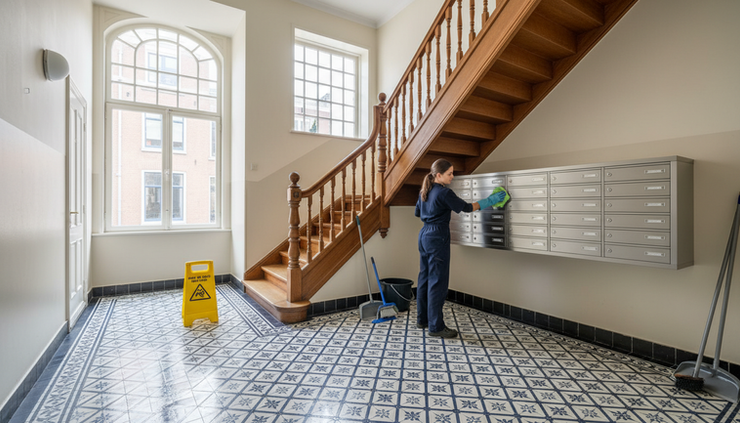
The size and layout of the building shape the base price
The first cost driver is usually the physical size of the common areas. A VvE with one small entrance and a short staircase needs far less work than a complex with several stairwells, lifts, galleries, storage corridors, and shared outdoor space.
Cleaning companies often look at:
Number of floors
Number of stairwells
Entrance halls and corridors
Lifts and lift doors
Shared storage rooms
Bike parking areas
Indoor waste rooms
Courtyards or galleries
Glass doors and windows in common areas
The layout matters as much as the square footage. A compact building with wide, easy-to-clean surfaces may take less time than a smaller canal house with steep stairs, narrow landings, and awkward corners. Older Amsterdam buildings often have details that need more careful work, such as wooden bannisters, historic tiles, or uneven stone floors.
A lift also changes the cleaning routine. Lift interiors show fingerprints, dust, mud, and scratches fast. Stainless steel panels, mirrors, and glass doors usually need regular attention. If the building has multiple lifts, that adds both time and cleaning materials.
For a fair comparison, a VvE should give each cleaning company the same building details. A site visit is usually better than a rough estimate by email, especially for older or less standard properties.
Cleaning frequency has a direct effect on monthly costs
Frequency is one of the clearest price factors. Weekly cleaning costs more than monthly cleaning, but the relationship is not always simple. A building cleaned less often may need heavier work during each visit. Dirt builds up, stains settle, bins attract odors, and floors may need more scrubbing.
Common cleaning schedules include:
Once a week for small and low-traffic buildings
Twice a week for busier apartment buildings
Three or more times a week for large complexes
Daily cleaning for buildings with heavy use or commercial activity
The right frequency depends on how residents use the building. A small VvE with mostly long-term residents may stay tidy with one visit per week. A larger building with many short-term tenants, frequent moving activity, or shared bike storage may need more attention.
Seasonal changes also matter. Amsterdam winters bring wet shoes, grit, leaves, and mud into entrances and stairwells. Spring and summer may bring pollen, dust, insects, and more use of courtyards or roof terraces. Some VvEs keep a fixed schedule all year. Others add extra visits during high-use periods.
A lower monthly price can look attractive, but if the building starts to look neglected between visits, the plan may be too light. The best value is usually a schedule that prevents buildup before it becomes harder to remove.
The level of service can vary widely
Not every cleaning quote includes the same tasks. One company may quote for basic stairwell cleaning only. Another may include lifts, windows, waste areas, and periodic deep cleaning. That difference can make two prices look far apart when they are not covering the same work.
A basic VvE cleaning plan often includes:
Sweeping and mopping common floors
Cleaning stairs and handrails
Removing cobwebs
Wiping entrance doors
Cleaning lift floors and buttons
Tidying visible litter in common areas
A more complete plan may also include:
Cleaning interior glass
Washing entrance mats
Cleaning skirting boards and ledges
Disinfecting high-touch points
Cleaning bin rooms
Removing stickers or light graffiti
Washing outdoor walkways
Periodic floor treatment
The difference between “cleaning” and “maintenance cleaning” is easy to overlook. Maintenance cleaning keeps a building presentable week after week. Deep cleaning restores areas that have built up grime over time. A VvE may need both, but not at the same frequency.
The cheapest quote is only useful if it clearly states what is included, what is excluded, and how often each task is done.
A clear task list prevents confusion later. It also helps residents understand what the monthly contribution covers.

The condition of the building affects the first quote
A building that has been cleaned regularly is easier to maintain. A building that has missed cleaning for months may need a reset before a normal schedule makes sense.
Cleaning companies may charge more at the start if they need to deal with:
Heavy dust buildup
Stained floors
Greasy handrails
Cobwebs in high corners
Dirty entrance glass
Old litter in storage areas
Neglected bin rooms
Marks from moving furniture
This initial work is not always part of the regular monthly fee. Some companies quote it as a one-time deep clean. Others include it in the first month or spread the cost across the contract.
The current condition also affects expectations. If residents expect the building to look fresh immediately, the cleaning company may need more time, stronger products, or special equipment. If the VvE only wants a gradual improvement, the plan can be lighter at the start.
Photos are useful, but they rarely show everything. Smells in waste rooms, sticky lift floors, worn entrance mats, and hard-to-reach corners are easier to judge during a walkthrough.
Amsterdam access and parking can influence labor time
Cleaning costs are not only about the minutes spent mopping floors. Travel, loading, parking, and access can also affect the price.
In Amsterdam, this can be a real factor. Many buildings have limited parking nearby. Some streets have strict loading rules. Canal-side properties can be harder to reach with equipment. If a cleaner needs to park far away and carry supplies through busy streets or narrow entrances, the visit takes longer.
Access arrangements also matter. A company may need:
Keys for several entrances
Access tags for lifts or gates
Alarm instructions
Entry to locked bin rooms
Clear contact details for emergencies
Storage space for supplies
If access is simple, cleaning becomes more predictable. If staff regularly lose time waiting for entry or searching for the right key, the service becomes less efficient.
Some VvEs reduce cost and friction by giving the cleaning company a labeled key set, clear instructions, and a small storage area for approved products. That does not remove the cleaning cost, but it can help avoid wasted time.
Waste areas often add more work than expected
Shared waste rooms and container areas can be one of the biggest sources of complaints in an apartment building. They can also affect cleaning costs more than a VvE expects.
Waste areas need more than a quick sweep when residents leave bags beside containers, cardboard piles up, or liquids leak onto the floor. Odors, pests, and stains can develop quickly. In dense Amsterdam neighborhoods, waste handling is often a sensitive part of building management.
The cleaning quote may change depending on whether the company must:
Sweep and mop the bin room
Clean around underground container access points
Remove loose litter
Break down cardboard
Report oversized waste
Disinfect floors or handles
Deal with spills
Clean walls or doors near bins
Not all cleaning companies remove bulk waste. Some will report it to the VvE manager instead. This should be clear in the agreement. If residents expect the cleaner to deal with everything left in the waste area, but the contract only covers floor cleaning, conflict is likely.
Clear house rules can reduce cleaning costs. When residents know how to dispose of cardboard, furniture, glass, and household waste, the common areas stay cleaner and the cleaning team can work faster.

Surface materials affect time, products, and care
Different materials need different cleaning methods. A hard-wearing tile floor is not the same as natural stone, untreated wood, or a coated surface. The wrong product can leave streaks, dull the finish, or cause long-term damage.
Common materials in Amsterdam apartment buildings include:
Ceramic or stone floor tiles
Natural stone steps
Wooden staircases
Painted walls and railings
Glass entrance doors
Stainless steel lift panels
Rubber or textile entrance mats
Natural stone may need pH-neutral products. Wooden stairs may need careful damp cleaning rather than heavy mopping. Stainless steel can show streaks if it is wiped with the wrong cloth or product. Glass doors may need frequent attention in buildings with high traffic.
Special surfaces can raise costs because they need more time, better products, or trained staff. Cheap cleaning can become expensive if it damages a floor or leaves a surface looking worse.
A good quote should mention any special care required for sensitive materials. If a building has valuable original details, the VvE should point them out before agreeing to a cleaning plan.
Resident behavior changes the workload
Two buildings with the same size and layout can have very different cleaning needs. Resident behavior is often the reason.
Cleaning takes longer when common areas are used as storage space. Bikes in hallways, shoes on landings, loose mail, delivery boxes, and furniture near exits all create obstacles. They also create safety concerns.
A cleaning team can work faster when floors and stairs are clear. They can mop properly, reach corners, and avoid moving personal items. If cleaners must constantly work around clutter, the result may be less consistent.
Building use also matters. A VvE may pay more if the property has:
Frequent move-ins and move-outs
Short-stay units or high tenant turnover
Ground-floor commercial spaces
Many delivery visits
Heavy bike storage use
Residents with pets
Shared outdoor areas used often
This is not about blaming residents. It is about matching the cleaning plan to real conditions. A building with heavy daily use needs a different plan than a quiet building with little foot traffic.
Good communication helps. Simple notices, clear house rules, and regular reminders from the VvE board or property manager can prevent common-area problems from becoming cleaning problems.
Contract terms affect the final price
The structure of the cleaning agreement also influences cost. A flexible one-off arrangement may cost more per visit than a steady long-term contract. A regular contract gives the cleaning company predictable work, which can support more stable pricing.
Important contract details include:
Contract length
Cancellation terms
Fixed or flexible schedule
Response time for extra work
Replacement staff during holidays
Quality checks
Reporting method
Supplies included or billed separately
Insurance and liability coverage
Some VvEs focus only on the monthly price and miss these details. That can lead to extra charges later. For example, window cleaning, graffiti removal, deep cleaning, and emergency cleanups may not be part of the standard fee.
Insurance also matters. Cleaning staff work on staircases, near glass, around electric fixtures, and sometimes in wet areas. A professional cleaning company should have proper coverage and safe working methods. A very low price may reflect missing protections, poor communication, or unclear responsibilities.
The best quote is not always the lowest one. It is the one that clearly explains the work, schedule, materials, and boundaries.
Comparing quotes fairly takes more than looking at the total
When several cleaning companies send offers, it helps to compare them side by side. A VvE should avoid choosing based only on the monthly amount. The scope may be very different.
Factor | What to check | Why it matters |
Building areas | Which spaces are included | Missing areas can lead to extra charges |
Frequency | How often each task is done | Some tasks may be weekly, others monthly |
Materials | Whether supplies are included | Separate product costs can change the total |
Deep cleaning | Whether periodic work is included | Regular cleaning may not remove old buildup |
Waste areas | What the cleaner does and does not handle | Bin rooms often create extra work |
Access | Keys, parking, and storage | Poor access can increase labor time |
Reporting | How problems are shared | Quick reports help the VvE act sooner |
A useful request for quote should include the same information for every provider. That gives the VvE a cleaner comparison and reduces the risk of surprises later.
Helpful details include:
Number of apartments
Number of entrances and floors
Photos or a floor plan if available
Current cleaning frequency
Desired cleaning frequency
Known problem areas
Waste room expectations
Preferred cleaning days
Access and key instructions
Any sensitive surfaces
The more accurate the request, the more accurate the quote.

Cheap cleaning can cost more if quality drops
VvE cleaning is a shared expense, so price pressure is normal. Owners want costs under control. Still, cutting the cleaning budget too far can create problems that cost more later.
Poor cleaning can lead to:
More resident complaints
Faster wear on floors and entrance mats
Bad odors in waste areas
Stains that become harder to remove
Safety risks from slippery floors
Lower trust in the VvE board or manager
Quality does not always mean choosing the most expensive company. It means choosing a cleaning plan that fits the building and is carried out consistently.
A VvE can control costs without lowering standards by doing a few practical things:
Keep common areas free of personal items
Set clear waste disposal rules
Choose the right frequency instead of the lowest frequency
Schedule periodic deep cleaning before dirt builds up
Give cleaners easy access to all required areas
Review the task list once or twice a year
Ask residents to report issues clearly, not vaguely
Small improvements in organization can reduce cleaning friction. That often protects the budget better than simply asking for a lower monthly fee.
The fairest price reflects the real building
The cost of VvE cleaning in Amsterdam comes down to time, complexity, frequency, access, materials, and expectations. A simple building with clear access and tidy residents will usually cost less to maintain than a large, older, high-traffic property with waste issues and sensitive surfaces.
A strong cleaning quote should be specific. It should say which areas are cleaned, how often tasks happen, what products are included, how extra work is handled, and what the VvE can expect after each visit.
For VvE boards and property managers, the best next step is a practical one. Walk through the building and list the spaces that truly need attention. Note the problem areas, the surfaces, the waste setup, and the times when the building gets dirtiest. Then ask cleaning companies to quote on that same clear brief.
A clean building is easier to respect, easier to manage, and easier to live in. The right cleaning price is the one that keeps it that way without paying for guesswork.


Comments