
The Hidden Dirt Costing VvEs Thousands Every Year

A VvE can plan for paintwork, elevators, roofs, and reserve funds. Dirt rarely gets the same attention.
That is the expensive part.
Dirt in shared apartment buildings does not stay cosmetic for long. It holds moisture against facades. It blocks drains. It feeds algae. It scratches floors. It clogs ventilation. It hides early signs of damage until a small cleaning job turns into an urgent repair.
For many VvEs, the problem is not that cleaning never happens. The problem is that cleaning is treated as a simple housekeeping expense, separate from building maintenance. That gap can quietly cost thousands every year.

Why dirt becomes expensive before anyone notices
Most dirt does not arrive all at once. It builds slowly, which makes it easy to ignore.
A light layer of dust on a stairwell floor gets swept away. A small green strip on the north side of a facade looks harmless. A few leaves in a roof gutter do not seem urgent. A ventilation grille with gray buildup still appears to work.
Then the weather changes.
Heavy rain hits a blocked drain. Moisture stays trapped behind organic material. Sand and grit grind into floor finishes. Dirty ventilation parts force systems to work harder or move air poorly. Residents start reporting leaks, smells, stains, and slippery surfaces.
At that point, the board is no longer discussing cleaning. It is discussing call-out fees, repairs, contractor availability, insurance questions, and complaints from owners.
That is why dirt belongs in the maintenance conversation. Cleaning is often the cheapest form of prevention a VvE has.
Where hidden dirt creates the most damage
Shared buildings have many places where dirt collects out of sight. Some are hard to access. Others are so familiar that residents stop seeing them. The largest costs often come from these overlooked areas.
Roofs, gutters, and drains
Roofs are one of the clearest examples of dirt turning into damage.
Leaves, moss, sand, bird droppings, and construction dust collect around drains and gutters. Flat roofs are especially vulnerable because water needs a clear route to leave the surface. When that route is blocked, water stands longer than it should.
Standing water can lead to several problems:
Extra stress on roofing materials
Water finding weak spots around seams or penetrations
Overflow staining facades
Leaks into top-floor apartments or shared areas
Emergency cleaning during bad weather
The cost difference can be large. A scheduled roof inspection and drain cleaning is usually predictable. An urgent leak investigation after a storm is not.
For VvEs with trees nearby, roofs and gutters may need more attention in fall and after periods of heavy wind. For buildings near busy roads, fine soot and dust can also build up into a sticky layer that traps moisture.
Facades, balconies, and window frames
Facade dirt can look like a surface issue, but it often marks a moisture pattern.
Dark streaks below window sills, green algae on shaded walls, grime around balcony edges, and black marks near ventilation outlets all tell a story. Water is running there. Pollution is sticking there. Organic growth is settling there.
If ignored, this dirt can speed up wear on paint, sealants, coatings, and masonry joints. It can also hide cracks and small defects that should be spotted early.
Balconies deserve special attention. Dirt and leaves can clog balcony drains. Moss can make surfaces slippery. Fine grit can scratch coatings when residents move chairs, planters, or bicycles. If water stays on a balcony too long, it may find its way into joints, thresholds, or lower levels.
A clean facade is not only about appearance. It helps the VvE see what condition the building is really in.
Ventilation grilles and technical spaces
Ventilation dirt is easy to underestimate because most of it is not visible from the ground.
Exterior grilles collect dust, pollen, soot, insects, and grease from nearby exhaust points. Interior grilles gather lint and household dust. Technical rooms can collect dirt behind equipment, around filters, and near ducts.
When air movement is reduced, residents may notice stale air, odors, condensation, or more dust inside apartments and common areas. The exact effect depends on the system, but one rule is simple: dirty ventilation parts make it harder for the system to do its job.
Technical areas also need clear visibility. Dirt, dust, and clutter can hide leaks, corrosion, pest activity, and worn components. A clean technical room makes inspections faster and more reliable.
Entrances, stairwells, elevators, and garages
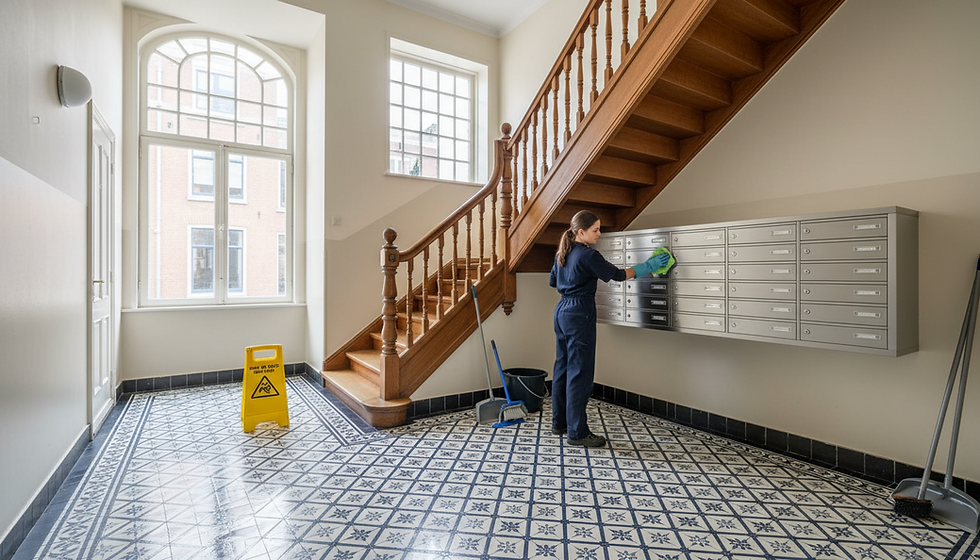
Common areas carry daily dirt from shoes, bicycles, strollers, pets, packages, and weather.
The entrance is the first filter. If entrance mats are too small, worn out, or poorly maintained, grit travels into the building. That grit acts like sandpaper on flooring. It can dull stone, scratch coatings, and wear traffic lanes into carpet or vinyl.
Stairwells and elevator floors suffer from the same problem. So do garage lobbies and storage corridors, where dust, tire residue, road salt, and moisture often collect.
Garages bring another layer of risk. Dirt can block drainage channels. Oil spots can create slip hazards. Fine concrete dust can spread into storage areas. If the garage is partly open to the outside, wind can push leaves and litter into corners where water also collects.

The real costs VvEs often miss
Dirt rarely appears as one neat line item called “damage caused by grime.” It spreads across different budgets, which makes the total harder to see.
Emergency call-outs
Blocked drains, slippery entrances, overflowing gutters, and leak complaints often trigger urgent contractor visits. Those visits tend to cost more than planned work, especially outside normal hours or during storms when many buildings have problems at the same time.
A VvE that waits for visible failure often pays for speed, not just service.
Shorter life for materials
Paint, coatings, sealants, flooring, and roof surfaces all last longer when kept clean and dry. Dirt holds moisture and pollutants against these materials. Grit creates abrasion. Organic growth can root into porous surfaces.
The result is gradual, but real: surfaces may need treatment sooner than expected.
This matters for the MJOP, or long-term maintenance plan. If the plan assumes a facade coating will last a set number of years, but the facade is never cleaned or inspected properly, the actual replacement date may move forward. That can strain the reserve fund and lead to difficult owner meetings.
More complaints from residents
Residents may not care about maintenance theory. They care when the stairwell smells musty, the entrance is slippery, the elevator floor looks dirty, or rainwater stains their balcony.
Complaints take time. The board or manager needs to respond, check the issue, contact suppliers, and explain decisions. If the same dirt-related issues return every season, the frustration grows.
Good cleaning routines reduce the number of small irritations that make a building feel poorly managed.
Insurance and responsibility questions
When leaks or slip incidents happen, the cause matters. Was a drain blocked? Was the surface maintained? Was the issue known? Were inspections documented?
Insurance outcomes depend on the policy and the facts, so no VvE should assume a claim will be accepted. Clear maintenance records help. They show that the building was not neglected and that the board took reasonable care.
That does not guarantee a result, but it puts the VvE in a stronger position than a vague memory of “someone cleaned it last year.”
The most expensive dirt is the dirt nobody assigns to anyone.
Why normal cleaning contracts often leave gaps
Many VvEs already have a cleaning company. That does not mean the building is protected from dirt-related damage.
Standard cleaning contracts often focus on visible, frequent tasks:
Vacuuming or mopping common floors
Cleaning entrance glass
Wiping railings and door handles
Emptying bins
Cleaning elevators
Removing obvious litter
Those tasks matter, but they do not always cover preventive building cleaning. Roof drains, facade details, balcony drainage points, garage channels, ventilation grilles, canopies, and technical rooms may fall outside the scope.
The contract may also use vague language. Words like “periodic,” “as needed,” or “general cleaning” can lead to different expectations. The cleaner may think roof drains are maintenance. The maintenance contractor may assume cleaning handles them. The board may assume both are watching.
That is where the hidden cost begins.
A VvE should know exactly:
Which areas are included
How often each area is cleaned
Which tasks require separate approval
Who checks the result
How issues are reported
What happens after storms or heavy leaf fall
If those points are unclear, dirt will find the gap.

How to find the hidden dirt in a VvE building
A useful inspection does not need to be complicated. It does need to be regular and specific.
Walk the building with a simple checklist. Take photos. Note locations clearly. Compare problem spots over time. The goal is to catch patterns before they turn into repairs.
Look after rain
Rain reveals where dirt and water work together.
Check for:
Puddles on flat roofs, balconies, galleries, and garage floors
Overflow marks below gutters or balcony edges
Mud or leaf buildup around drains
Damp patches in stairwells, storage areas, and technical rooms
Green growth on shaded walking surfaces
If water remains long after rain has stopped, the building may have a drainage or cleaning issue.
Check the building from top to bottom
Start at the roof if access is safe and permitted. Then move down through technical spaces, upper galleries, stairwells, entrances, garages, and storage rooms.
This route helps connect cause and effect. A stain on a wall may come from a clogged gutter above. Dirt near a garage drain may explain water tracking into the lobby. Dust around a technical installation may reveal poor access or missing cleaning responsibility.
Use photos instead of memory
Photos remove debate. They show whether algae is spreading, whether a gutter was cleared, and whether a contractor completed the work.
Keep the records simple:
Area | What to record | Why it matters |
Roof drains | Before and after cleaning photos | Shows that water routes were cleared |
Facade stains | Same angle every few months | Tracks whether moisture patterns are growing |
Entrance floors | Wear lines and grit buildup | Helps judge matting and cleaning frequency |
Ventilation grilles | Visible dust and blockage | Supports timely cleaning and inspection |
Garage drains | Dirt, leaves, and oil spots | Reduces slip and water problems |
This also helps the VvE make better decisions at meetings. Owners respond more clearly to photos than to vague descriptions.
A practical cleaning rhythm for prevention
The right schedule depends on the building, trees, weather exposure, nearby traffic, ventilation type, and resident use. A small building on a quiet street may need less attention than a large complex near trees and a busy road.
Still, most VvEs benefit from separating cleaning into three levels.
Weekly or biweekly visible cleaning
This covers the areas residents use every day. Entrances, stairwells, elevators, corridors, and lobbies should look cared for and stay safe.
The key is not only frequency. It is whether the work removes the dirt that causes wear. Dry grit should be removed before mopping, otherwise it can spread and scratch surfaces.
Seasonal preventive cleaning
Seasonal work catches predictable dirt.
Fall is often the time for leaves in gutters, roof drains, balcony drains, and garage entrances. Spring may reveal algae growth, pollen buildup, and dirty facade sections after wet months. After winter, entrances and garages may need extra attention because of tracked-in grit and salt.
Seasonal cleaning is easier to plan than emergency work. It also gives the board a natural moment to inspect the building.
Annual specialist checks
Some areas need trained contractors or safe access equipment. Roofs, high facades, ventilation systems, and certain technical rooms should not be handled casually.
An annual specialist check can identify:
Blocked or slow drains
Early facade defects hidden by dirt
Moss or algae on risky surfaces
Dirt buildup around ventilation components
Cleaning tasks missing from existing contracts
This does not mean every issue needs expensive work. It means the VvE knows what is happening before residents discover it through damage.

How VvEs can stop paying for the same dirt twice
The best approach is to connect cleaning, inspections, and the maintenance plan.
Start by reviewing the cleaning contract. Do not only check the price. Check the scope. If roof drains, garage channels, balcony drainage, ventilation grilles, canopies, and technical rooms are missing, decide who owns those tasks.
Next, add dirt-sensitive areas to the MJOP discussion. A long-term plan should not only list replacement years. It should also include the care that helps materials reach those years.
Then create a simple reporting route. Cleaners often see problems first. Give them a clear way to report blocked drains, stains, standing water, damage, or unsafe surfaces. A short photo message to the manager can prevent weeks of delay.
It also helps to approve small preventive budgets in advance. If every minor cleaning task needs a full meeting decision, the building will wait too long. Clear limits allow the manager or board to act on predictable issues.
The aim is not to clean everything constantly. The aim is to clean the right things before they become repairs.
The cleanest buildings are easier to manage
Dirt will always come back. Buildings face rain, wind, traffic dust, leaves, insects, and daily use. No VvE can prevent that.
What a VvE can control is whether dirt becomes invisible until it is expensive.
A cleaner building is easier to inspect. Drains work better. Floors last longer. Facade problems show earlier. Residents complain less about avoidable issues. Contractors can do their work without first clearing neglect.
The hidden dirt costing VvEs thousands every year is often ordinary dirt in ordinary places. Gutters. Grilles. Corners. Drains. Entrances. Garages. Balcony edges. The places everyone passes, but nobody owns.
Give those places a name, a schedule, and a responsible person. That simple shift can protect the reserve fund better than any last-minute repair ever will.


Comments