
Why Amsterdam Apartment Buildings Are Losing Value Over an Overlooked Cleaning Problem

A buyer can forgive an old staircase. They can even accept a small lift, a narrow entrance, or a bicycle pile-up by the door. But one thing makes an apartment building feel neglected almost instantly: dirty shared spaces.
In Amsterdam, where many apartment buildings are older, tightly packed, and managed through a VvE, cleaning is often treated as a small operating task. It sits far below roof repairs, interest rates, energy labels, and major renovations on the list of concerns.
That is a mistake.
The overlooked problem is deferred cleaning in communal areas. Think stained entry halls, dusty stairwells, greasy intercom panels, overflowing bin rooms, mossy courtyards, dirty windows, and grime on façades. None of these may look dramatic on their own. Together, they send a strong signal: this building is not being cared for.
That signal can affect how buyers, renters, appraisers, insurers, and residents judge the property.

The overlooked cleaning problem is really a trust problem
Cleaning sounds simple. Because of that, many apartment owners underestimate it.
A dirty stairwell does not always mean the roof is leaking. A stained lobby does not prove the VvE has no money. A dusty hallway does not automatically lower the official valuation of every apartment in the building.
But property value is not shaped by technical facts alone. It is also shaped by belief.
When someone enters a building, they quickly form a view of how the place is managed. Clean shared areas suggest that residents and the VvE pay attention. Dirty shared areas suggest the opposite.
That matters because apartment ownership in Amsterdam is shared ownership in practice. A buyer is not only buying walls, floors, and a view. They are buying into a building, a reserve fund, a maintenance culture, and the decisions of neighbors.
If the entrance smells sour, the stair rails feel sticky, and the bin room looks unmanaged, the buyer starts asking harder questions.
Is the VvE active?
Are residents paying their contributions?
Has routine maintenance been delayed?
Will future repairs become expensive?
Are pests or moisture already a problem?
Will the building be pleasant to live in?
A clean building does not answer every question. But a dirty one raises them fast.
In apartment buildings, visible neglect often acts like a warning label. It may not prove a serious defect, but it makes people look for one.
Why Amsterdam buildings are especially vulnerable
Amsterdam apartment buildings have features that make cleaning more than a cosmetic issue.
Many buildings are old, narrow, and densely used. Shared spaces are small. Stairwells often carry years of foot traffic. Weather blows leaves, mud, and canal-side grit into entrances. Bikes, delivery traffic, pets, tourists, short-stay guests, and daily waste collection all add wear.
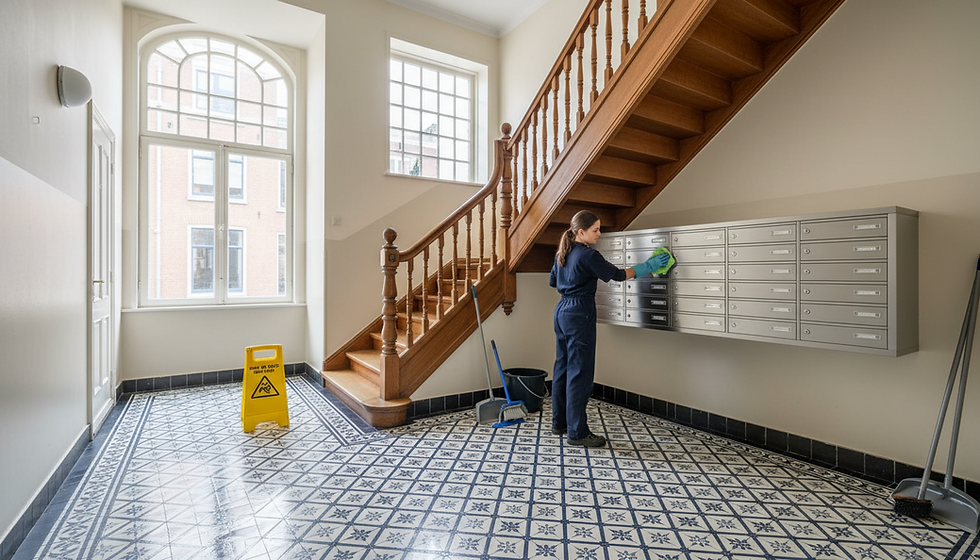
In newer buildings, dirt spreads too. Glass doors, polished floors, elevators, mail areas, and parking entrances show fingerprints and stains quickly. A modern lobby that is not cleaned well can look older than it is.
Amsterdam also has a housing market where small differences matter. Two apartments with similar size, location, and energy performance can feel very different during a viewing. The private apartment may be beautiful, but buyers still walk through the shared entrance first.
That first impression can either support the asking price or weaken it.
There is also a local management factor. Many apartment buildings are governed by a VvE, the owners’ association. Some VvEs are organized and proactive. Others struggle to agree on budgets, schedules, or service quality. Cleaning can become one of the first things to slip because it feels easy to postpone.
The problem is that postponing cleaning rarely saves much in the long run. Dirt attracts more dirt. Stains settle. Moisture stays longer on surfaces. Odors become harder to remove. Residents stop caring because the space already looks bad.
At that point, the building is no longer just dirty. It has entered a cycle of neglect.

How poor cleaning can reduce building appeal
Cleaning does not change the legal floor area of an apartment. It does not add a balcony or improve the energy label. Still, it can affect value by changing how the building is perceived and how much risk people attach to it.
It weakens the first viewing
Property viewings are emotional as well as practical. Buyers notice light, smell, noise, and upkeep before they study documents.
A clean entrance makes the building feel safer and more stable. A dirty entrance can make even a renovated apartment feel compromised.
Common warning signs include:
Sticky floors near the entrance
Dusty window ledges and corners
Cobwebs in stairwells
Dirty lift doors and buttons
Bad smells from bins or drains
Stained walls near bikes or stored items
Loose litter around mailboxes
Grease or hand marks on shared doors
None of these looks expensive on its own. Together, they create doubt.
It suggests weak VvE management
A buyer in Amsterdam often reviews VvE documents before purchase. They may look at meeting minutes, budgets, insurance, reserve funds, and long-term maintenance plans.
Before they read any of that, they see the building.
If the shared spaces look uncared for, the buyer may assume the VvE is reactive rather than proactive. That can make them more cautious, especially if the building is older or already needs roof, façade, foundation, or energy-related work.
A well-cleaned building gives a different signal. It says routine tasks are handled. It suggests that residents agree on standards. It makes the building feel managed.
It can hide early maintenance issues
Dirt can cover small problems until they grow.
For example, a damp-smelling bin room may point to poor ventilation or drainage. Moss and algae near an entrance may keep surfaces wet and slippery. Dirty gutters and drains can make rainwater problems worse. Dust around ventilation grilles can reduce airflow and contribute to stale indoor air.
Cleaning does not replace maintenance. But it helps reveal what needs maintenance.
That is one reason regular cleaning should not sit apart from building care. It is part of the inspection rhythm.
It affects resident behavior
People tend to treat neglected spaces with less care.
If a hallway is already dirty, residents are more likely to leave old flyers, broken umbrellas, cardboard, or bulky waste behind. If the bin area is messy, people may stop separating waste properly. If the bike area feels chaotic, abandoned bikes stay longer.
Clean spaces set a standard. Dirty spaces lower it.
That shift can affect daily living, neighbor relations, and the long-term image of the building.
The worst trouble spots in Amsterdam apartment buildings
Some shared areas create more damage to value than others because nearly everyone sees or uses them.
Area | What often goes wrong | Why it matters |
Entrance hall | Mud, stains, fingerprints, mail clutter | It sets the tone for the whole viewing |
Stairwell | Dust, cobwebs, scuffed walls, sticky rails | It makes the building feel poorly managed |
Lift | Dirty buttons, odor, marked doors | It affects comfort and perceived safety |
Bin room | Smell, pests, liquid stains, overflow | It can signal hygiene and management problems |
Courtyard | Moss, weeds, litter, dirty paving | It affects light, outlook, and resident pride |
Windows and glass | Grime, streaks, green buildup | It reduces the sense of brightness and care |
Façade details | Algae, soot, residue, bird droppings | It makes the outside look older and less maintained |
Gutters and drains | Leaves, sludge, standing water | It can contribute to water problems |
The entrance, stairwell, and bin area deserve special attention because they shape daily experience. They are also where minor neglect becomes visible fastest.
A newly painted hallway will not help much if the floor is sticky and the corners are full of dust. A modern lift will not impress if the buttons are greasy and the walls smell stale.

Cleaning affects more than appearance
The strongest case for regular cleaning is not that buildings should look polished. It is that cleaning protects the building’s condition and reputation.
Moisture and organic buildup can speed up wear
Amsterdam’s damp weather can make exterior grime more persistent. Algae, moss, and dirt hold moisture against surfaces. On paving, stairs, and thresholds, that can create slippery areas. On façades and window surrounds, it can make a building look tired and older than it is.
This does not mean every green patch is a structural threat. But it does mean exterior cleaning should be planned, not ignored until the surface looks neglected.
Odor changes how people judge a home
Smell is powerful. A clean apartment can lose appeal if the hallway smells like old bins, damp carpet, smoke, or blocked drains.
Odors also linger in memory. During a short viewing, a buyer may not remember every detail of the floor plan. They will remember feeling uncomfortable in the stairwell.
Pest prevention starts with routine habits
Waste rooms, storage spaces, basements, and courtyards can attract pests if food residue and rubbish are left unmanaged. Once pests appear, the issue becomes more expensive and stressful.
Good cleaning does not solve every pest issue, but it removes many of the conditions that make pests more likely.
Safety can be affected
Slippery algae, loose dust on stairs, blocked walkways, and waste left in escape routes can create real safety concerns.
This is where cleaning moves beyond presentation. A building with clean, clear shared routes is easier and safer to use. It also feels more orderly to residents and visitors.
The difference between cheap cleaning and good cleaning
Many VvEs pay for cleaning, but the result still disappoints residents. That often happens because the cleaning plan is too vague.
A contract may say that common areas are cleaned weekly. But what does that include? Floors only? Railings? Door glass? Mailboxes? Lift buttons? Corners? Bin rooms? Exterior steps?
Without detail, everyone assumes something different.
A useful cleaning plan should define:
Which areas are included
How often each area is cleaned
Which tasks happen weekly, monthly, or seasonally
Who checks the quality
How residents report missed work
How waste problems are handled
When deep cleaning is scheduled
Which surfaces need specialist care
A basic weekly clean may be enough for a quiet building with a few apartments. It will not be enough for a large building with lifts, shared waste areas, high visitor traffic, or short-stay use.
Good cleaning also needs periodic deep work. That can include machine scrubbing floors, washing interior glass, removing stains, cleaning ventilation grilles, treating algae on exterior paving, and refreshing bin areas.
The goal is not to make every building look luxury. The goal is to make it look cared for.

What VvEs and owners can do now
The fix starts with a shift in mindset. Cleaning should be treated as part of asset care, not as an afterthought.
A practical approach can be simple.
Walk the building like a buyer
Start outside. Enter through the normal door. Use the stairs. Look at the lift, mail area, bike storage, bin room, basement, windows, and courtyard.
Notice what creates doubt.
Do not only look for dirt. Look for signals of neglect, such as unclear waste rules, abandoned items, stained walls, poor lighting, and areas no one seems responsible for.
Create a clear cleaning map
List every shared space and surface that needs attention. Then set the right frequency.
Some areas need weekly cleaning. Others need monthly or seasonal work. Exterior paving, façade details, drainage points, and high windows may need planned specialist cleaning.
A cleaning map helps the VvE avoid vague complaints and unclear expectations.
Add cleaning to the maintenance conversation
When the VvE discusses painting, repairs, energy upgrades, or insurance, cleaning should be part of the same conversation.
For example, if the hallway walls are being repainted, the floor cleaning schedule should also be reviewed. If the bin room is being reorganized, cleaning and odor control should be included. If roof drainage is being inspected, gutter cleaning should be planned.
This prevents the common pattern where repairs are made, then the building quickly looks neglected again.
Set resident rules that are easy to follow
Cleaning services cannot fix everything if residents use shared spaces poorly.
Clear rules help. They should be simple and visible:
Do not leave bulky waste in halls
Keep escape routes clear
Use the correct bins
Report spills or broken bags
Remove abandoned bikes through an agreed process
Keep personal items out of shared stairwells
Rules work best when the building makes them easy to follow. If waste instructions are confusing or bin capacity is too low, mess will return.
Review quality before changing price
If cleaning looks poor, many VvEs immediately blame the cleaner or the cost. Sometimes that is fair. Often, the issue is scope.
Before switching providers, check whether the current agreement is specific enough. A low-cost contract with unclear tasks may only cover the basics. A slightly better-defined plan can make a visible difference without turning the budget upside down.
Clean buildings protect confidence
Amsterdam apartment values are shaped by many forces, including location, size, energy performance, interest rates, leasehold terms, building condition, and VvE health. Cleaning is only one part of that picture.
But it is one of the most visible parts.
A neglected entrance can weaken trust before a buyer reaches the front door of the apartment. A dirty stairwell can make a strong VvE look careless. A smelly bin room can turn a practical issue into a value concern. Grime on windows, paving, and façades can make a building feel older than it really is.
The overlooked cleaning problem is not just dirt. It is the message dirt sends.
For Amsterdam apartment buildings, regular cleaning is a low-drama way to protect appeal, comfort, and confidence. The buildings that hold attention are not always the newest or the most expensive. Often, they are the ones that look like someone is paying attention.


Comments